
Jinny Moon named her product after a Korean phrase people use when a store slashes prices: "사장님이 미쳤어요," meaning "the boss has gone crazy." She built the first version in a few weeks for close to $0. Then she deleted most of what she'd built, because the thing she'd spent the most time on turned out not to be the product at all.
Product: Crazy Sajangnim Category: Fashion / Community / E-commerce Founded: 2026 Team size: Solo founder Website: crazy-sajangnim-1.vercel.app SaaS Hive page: https://saashive.com/products/crazy-sajangnim
What were you doing before Crazy Sajangnim, and how did the idea come to you?
I was working at a Korean startup called EXTORY, where I got hands-on experience with frontend and backend development as well as building admin tools. That experience gave me the confidence to start building something of my own.
The idea came from a friend I often talk about fashion with. He mentioned how useful it would be to have an app that showed only discounted items from the brands he likes. I liked the idea and expanded it by adding a community and fashion blog element, so people could not only discover sale items but also share finds, discuss fashion, and get opinions from others.
The name came from a common Korean phrase, "사장님이 미쳤어요," which roughly means "the boss has gone crazy" and is often used when a store is offering unusually large discounts. Since "sajangnim" means "boss," that phrase became the inspiration for the name.
In one or two sentences, what does Crazy Sajangnim do and who is it for?
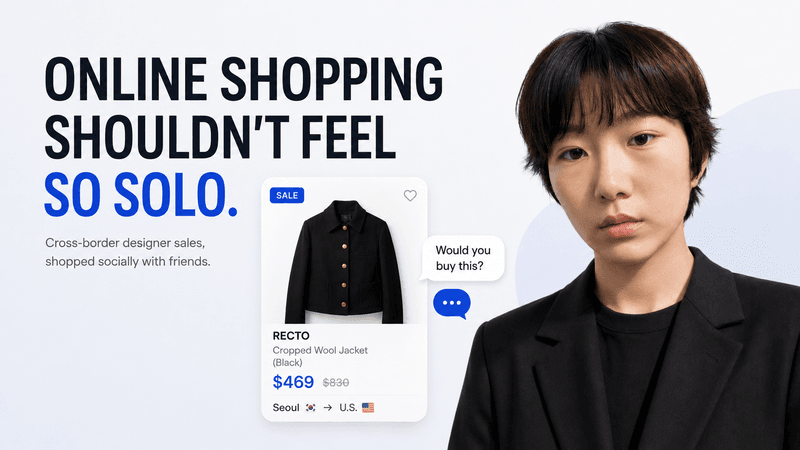
Crazy Sajangnim is a community-based fashion shopping platform where people can share products from across the web, get opinions, compare finds, and make buying decisions together. It's for fashion enthusiasts, especially shoppers who want a second opinion before spending money on something they're considering.
How long did it take to build your first version, and how much did it cost to get there?
The first usable version came together within a few weeks. Since I built the frontend, backend, admin tools, and deployment myself, the direct cost was close to $0 at the beginning. I relied heavily on free tiers and developer tools like Vercel, Supabase, and open-source services, so the biggest investment was really my own time.
As I kept developing, I added more infrastructure, analytics, automation, authentication, and community features, but I deliberately tried to keep costs low while I was still validating whether people actually wanted the product.

What did you spend time or money on that turned out to be a complete waste?
The biggest waste of time was overbuilding the automated sale-product collection system. I spent a lot of time figuring out how to scrape and organize discounted products from different retailers, automatically add products when new brands were added, and build admin tools around managing all of that data.
Eventually, I realized that simply becoming another sale-product aggregator was not what made Crazy Sajangnim interesting. The more valuable idea was the community side. Letting people bring in products from anywhere, share what they are considering buying, and get opinions from other fashion enthusiasts. A lot of the complicated infrastructure I built around automatically collecting sale inventory became much less important once I understood that the real product was co-shopping, not scraping.
How did you get your first users?
Most of my users came from posting on product launch websites like SaaS Hive and Product Hunt. I also had friends join, check out the site, and share clothing ideas with me through the blog feature.
At this stage, I'm focusing more on getting real feedback than trying to grow quickly. I want to understand which parts of the product people actually come back for, whether that's discovering fashion, sharing items, or getting other people's opinions before buying something, and then use that to guide the next phase.
What's one decision you've made so far that had the biggest positive impact on your product or business?
Choosing the community over the catalog. I had built the scraping systems, the admin tools, the sale browsing. All of it worked. But the moment I decided that co-shopping was the product and aggregation was just a feature, everything else got easier to decide. It's why the blinking share button mattered more to me than adding another thousand products.
What's the best feedback or reaction you've gotten from someone who's tried Crazy Sajangnim?
The strongest reaction I've gotten was from someone who said Crazy Sajangnim was solving a part of shopping that most fashion platforms ignore: the space between "I found it" and "I bought it." They pointed out that when you're considering an expensive fashion purchase, you often want someone you trust to tell you whether it's actually a good deal, whether you'll wear it, or simply, "Buy it" or "Absolutely not."
They saw it as something that could become much bigger than a sale-discovery site. A community where people who genuinely care about fashion help each other compare prices, understand quality and fit, share styling opinions, and even talk each other out of expensive mistakes. They told me to protect that community aspect, because there are already plenty of places to buy designer products, but far fewer places that help you make the decision together.
What's been the lowest moment so far? What kept you going?
Realizing I had spent a lot of time building features without being completely sure whether they were the features people actually wanted. I had built product collection systems, admin tools, sale browsing, and other technical pieces, but I started to question whether Crazy Sajangnim was becoming just another shopping website instead of something people would genuinely come back to.
What kept me going was the feedback from early users. A few people understood the community idea immediately and told me the most interesting part was not finding discounted clothing, but having a place to ask, "Should I actually buy this?" and get opinions from people who care about fashion. That helped me see a clearer direction. I'm still very early, so I try to treat the uncertainty as part of the process rather than as a sign that I should stop building.
How do you decide what to work on next? What gets priority and what gets ignored?
If multiple people point out the same problem, it moves up the list quickly. When users mentioned that the blinking "Share on blog" button was distracting, that search was missing, or that they wanted more product information before leaving the site, I treated those as more important than adding entirely new features. The same happened when someone pointed out that the site was missing a privacy policy, terms of service, and account deletion. I prioritized those immediately, because trust and security matter before growth.
I also ask whether a feature makes Crazy Sajangnim more distinct. Features that help people share products, ask whether something is worth buying, discuss styling, or get opinions from other shoppers now matter more to me than adding more products to the catalog.
What gets ignored: features that are technically interesting but don't clearly improve the experience, ideas that make the product look more like a normal shopping aggregator, and things that only matter at a much larger scale. I'm still early, so I would rather fix something that five real users are confused by than build something for thousands of hypothetical users I do not have yet.
What's the one reason someone would pick Crazy Sajangnim over the alternatives?
It focuses on the moment most shopping platforms ignore: deciding whether you should actually buy something. Instead of only showing products, prices, or reviews, Crazy Sajangnim lets you bring in a fashion item, share it with a community, and get real opinions on whether it's worth the price, how it might fit or style, and whether there's a better option.
There are already plenty of places to discover clothes and compare prices. What I want Crazy Sajangnim to offer is the feeling of shopping with people who care about fashion and will actually tell you, "Buy it," "Skip it," or "You can do better."
Where can people find or try Crazy Sajangnim?
Try it at crazy-sajangnim-1.vercel.app
Connect with Jinny on LinkedIn: Jinny Moon

This interview has been lightly edited for clarity and flow. All answers are Jinny's own words.
Comments (0)
Sign in to leave a comment.
No comments yet. Be the first to share your thoughts.